

Is the ‘$100k by 30’ goal still relevant?
For decades, personal finance told us one thing:
Save more money, spend less. Delaying gratification is better than instant gratification.
Then came the FIRE movement that I’m really interested in and obsessed with. But in recent
times, I have been doing some thinking and looking at how our world is right now.
Things are changing so quickly. Costs are rising faster than ever, and a new narrative is emerging which begs the question: “Is saving still noble, or is it shrinking people?”
Where Did “Save $XXX by XX” Come From?
Back in our parents’ times, and this is applicable for both Millennials and Gen Zs, climbing the career ladder was something that everyone strived for. And it made sense, because everyone had 30-40 years of stable careers.
Even my mum, she’s been in her current company for more than 35 years, and it’s a badge that she proudly wears. And me, on the other hand, probably at my 5th or 6th job.
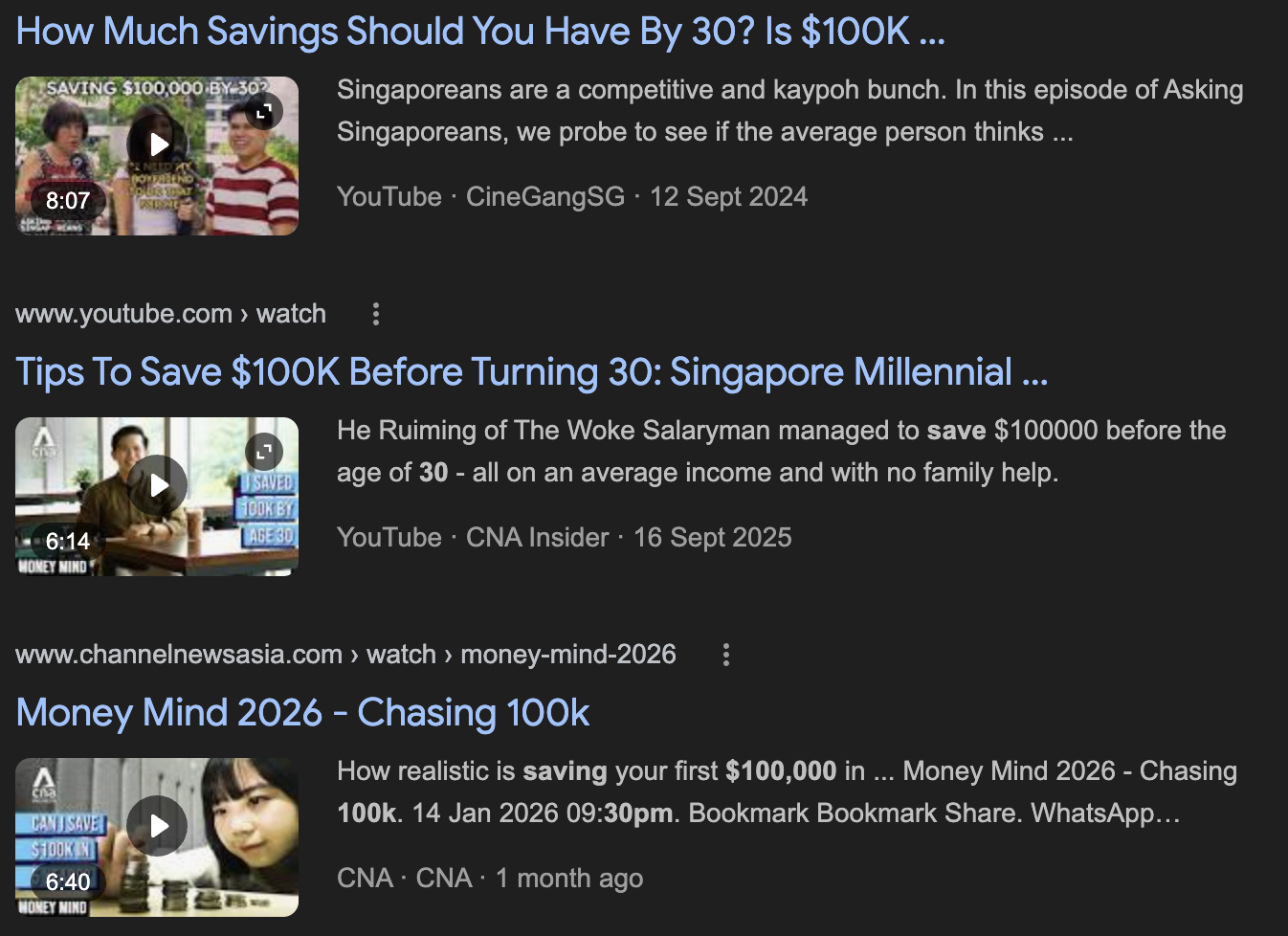
Is the ‘$100k by 30’ goal still relevant?
Back then, properties were relatively cheaper at 1.8-2.5x an annual income. Fast forward to 2026, this number has doubled, while salaries have not, which is why the narrative of whether saving for a house is something to even think about.
Why Gen Z Is Rejecting Saving?
Taking a step deeper, looking through the lens of an average Gen Z worker, 3 main drivers are causing this shift in thinking.
1. Asset Inflation is faster than wage growth
The median salaries in Singapore haven’t grown significantly, but the prices of assets like properties have been on an upward trend. In the 1990s, housing prices were 2x household income for an HDB flat.
Today, it’s 4-5x household income, and for private properties, it’s 13-15x annual income.
And now, imagine someone earning $5,500 a month, hearing “Just save more, then you can buy your house”. What plays out in the person’s mind is not the end goal of buying the house, but things like a 5-digit down payment, a 25-30-year mortgage, interest rates that spike and crash without warning, Buyers’ stamp duties and high renovation costs.
I also felt the same when I was getting my flat. All that effort I go through to earn my salary, a large proportion goes to the down payment of the property, which makes me feel like I’m always playing catch-up, trying to afford a place of my own.
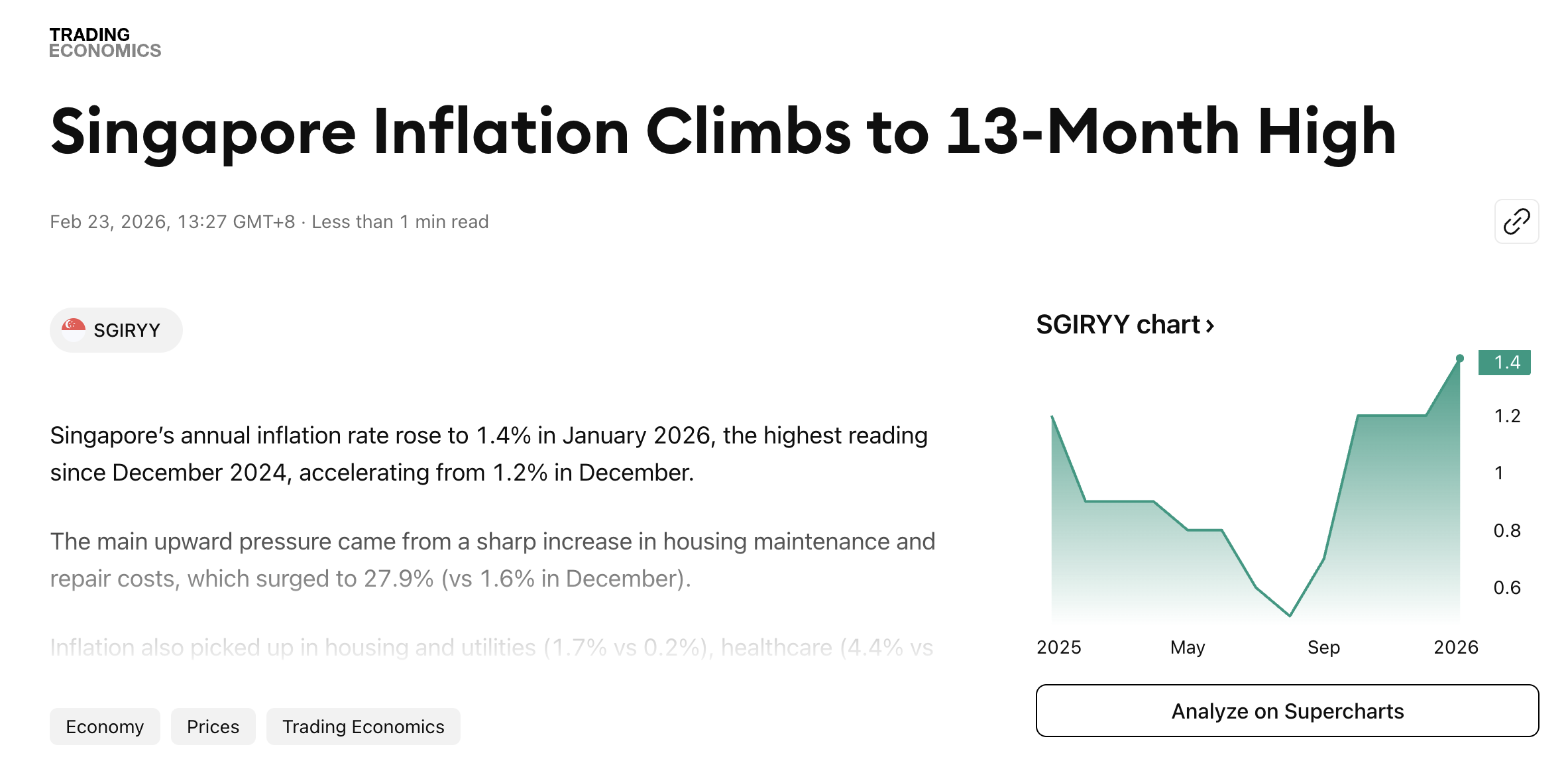
Coupled with the increase in Cost of Living, like insurance premiums, food, transportation and groceries, living as a young adult in Singapore can be quite a challenging task. Especially with shrinkflation, where we get less of something, but we are paying the same prices or more.
2. Delayed gratification fatigue
Before 2020, the narrative that people had was work hard now, retire later and enjoy life at 60. But when Covid struck, people’s jobs disappeared overnight, businesses collapsed, travel shut down, health became uncertain, and people lost friends and family overnight.
When such a catastrophe occurs, the future doesn’t seem guaranteed, which then alters us psychologically. For the average Singaporean worker, the mindset changed from “I’ll travel after retirement” to “I’ll go to Japan for that Ski Trip this year”, instead of “I’ll only enjoy XYZ when I hit $XX net worth”, it becomes “I don’t want my entire 20s and 30s to be just spreadsheets”
And this also alters the way we start spending our money. Things like travel, experiences, dining and hobbies are not just expenses. They become a form of social bonding, a stress release, mental health maintenance and in some way, it also becomes our identity.
3. Identity-Based Finance
For many Singaporeans today, basic survival is relatively stable. We do not have to save to avoid a famine or drought, which can be life-altering. More often than not, we are saving for upgrades, freedom and optionality.
For the older generation, spending was mainly functional. Meaning there was a logical reason in spending money like buying a house, which gives stability, buying a car, which gives transportation and saving because it gives us financial security.
Money to them is about safety and status through assets, hence we see a lot of ‘you should have $XYZ by 30’ kinda content. Because reaching that ‘magic number’ is a milestone and would put you above the average.
But for the younger generation, especially the younger millennials and Gen Z, spending doesn’t carry a logic behind it, but it’s more of a communication of who you are.
For example, back in the late 1990s to 2000s, your spending wasn't broadcast or shown publicly to people. Chances are, it’s only shown during a family gathering where your parents took out a photo album showing the last couple of holidays you guys went on.

IG Post of Bali Holiday. Credits: @engrpink
Today, your Bali trip is on Instagram, your omakase dinner is on TikTok, your gym or my gym progress is on stories, and your wardrobe is curated from online channels. In some way, spending became more public, more sharable and performative.
This doesn’t mean it’s a fake life, but a more visible life. And with increasing visibility, signalling increases as well. And saving aggressively could mean becoming invisible because you stop appearing at gatherings just to save money, or not participating in activities because you have hit your budget.
It makes you feel small or even feel as though your social presence is shrinking.
But this doesn’t have to be that way, because there’s a better model that works, and it’s called “Earn & Expand” and this consists of 4 pillars.
1) Increasing Earning Capacity Yearly
So instead of obsessing over cutting out your $5 morning lattes, ask yourself questions like : “How do I increase income by 10-20% over the next 3 years?” Because with income growth, it gives you more breathing room to expand and do more things.
2) Automate baseline investing
This pillar is something that I’m really passionate about and have covered many, many different tools that you can use to automate your investing so you don’t have to worry about your money while you focus on your work.
Basically, you want to let compounding interest to do itf job while you live your life.
3) Define high-joy categories
Ask yourself, what truly makes you happy? Is it 1-2 trips per year to Japan? Having a nice meal once a quarter at your favourite restaurant? Hitting the gym 2-3 times a week? Or just having the latest tech that you can afford?
Ideally, you should pick 1 of these and cut everything else. What you want to achieve here is intentional spending that will fulfil your heart and soul, and not reckless spending, just because you are stressed.
4) Tracking Networth Quietly
Abundance is built and not declared. You don’t have to let the world know when you hit your personal finance milestone. You don’t need their validation either. Because real wealth compounds in silence. Once you start building silence and ignoring the noise, you are shifting from building security to curating perception.
The Real Reframe
The world has undergone significant changes, and these are just some of my observations so far. I might be wrong, but something that I’m sure of is that it isn’t wrong to question old money rules. Because the world we live in is vastly different from how it was 10 years ago.
Saving shouldn’t shrink your life. But spending without intention won’t expand it either.
And the real flex is building abundance without financial delusion.
That’s not Save & Shrink. That’s Earn & Expand.
