

Is your crypto safer on an exchange or in a hardware wallet?
Moving Bitcoin or other cryptocurrencies off an exchange is often described as a ‘security upgrade’.
Buy a hardware wallet, transfer your coins, and you're safer.
Because:
Not Your Keys, Not Your Coins.
But I don't think it's quite that simple.
Self-custody doesn't eliminate risk. It changes which risks you're responsible for managing.
An exchange can expose you to platform and custody risks. A self-custody wallet gives you more control over your assets, but makes you responsible for protecting access, understanding transactions and recovering your wallet.
Before moving your crypto, there are 3 risks worth understanding.
1. Custody Risk: Who controls your crypto?
When you hold cryptocurrency on a centralised exchange, the platform generally manages the private keys and much of the wallet infrastructure.
That's convenient. You can access your account through an interface you're familiar with, and the platform may offer account-recovery processes.
But you're also dependent on the exchange.
If withdrawals are suspended, the platform experiences a security incident, or the business fails (ahem! FTX), you may not be able to access or transfer your assets when you want to.
With self-custody, you control the private keys instead. This reduces your reliance on the exchange for access. But it also means you take on responsibilities that the exchange previously handled.
Crypto exchange vs self-custody: Which should I pick?
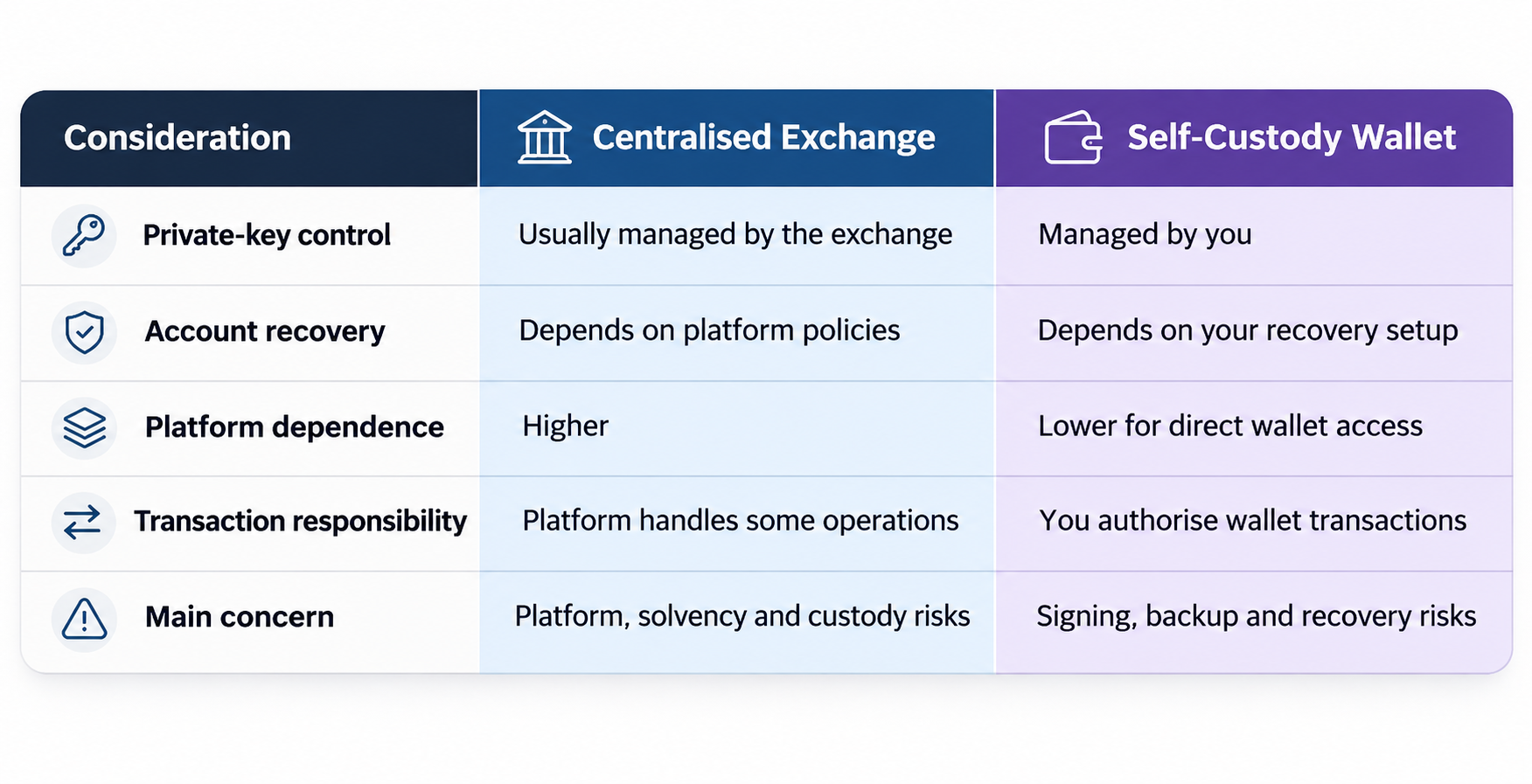
Storing your Crypto on an exchange vs Self Custody
Neither approach removes cryptocurrency market risk.
The point is to understand what you're choosing to manage yourself.
2. Signing Risk: A hardware wallet can't make every decision for you
This is one of the biggest risks I think people underestimate.
A hardware wallet can help protect your private keys. But it cannot guarantee that every transaction you approve is safe.
Imagine using a hardware wallet to interact with a website; the website asks you to approve a transaction or give a smart contract permission to access certain tokens.
You approve it without understanding the request.
Your private key may have remained protected throughout the process. But you've still authorised something potentially dangerous.
That's because that signature proves that the relevant key authorised an action. It doesn't prove you understood the consequences.
Before signing a crypto transaction, I try to answer four questions:
What am I sending or authorising?
Who is receiving it, or which contract is receiving permission?
Which blockchain network am I using?
What fees or permissions am I accepting?
If I can't explain those things in plain English, that's a reason to stop and investigate.
And this isn't just a theoretical concern.
The Singapore Police Force has warned cryptocurrency users about malicious links and unauthorised transactions. Its guidance highlights the need to review signing requests carefully, including when using hardware wallets.
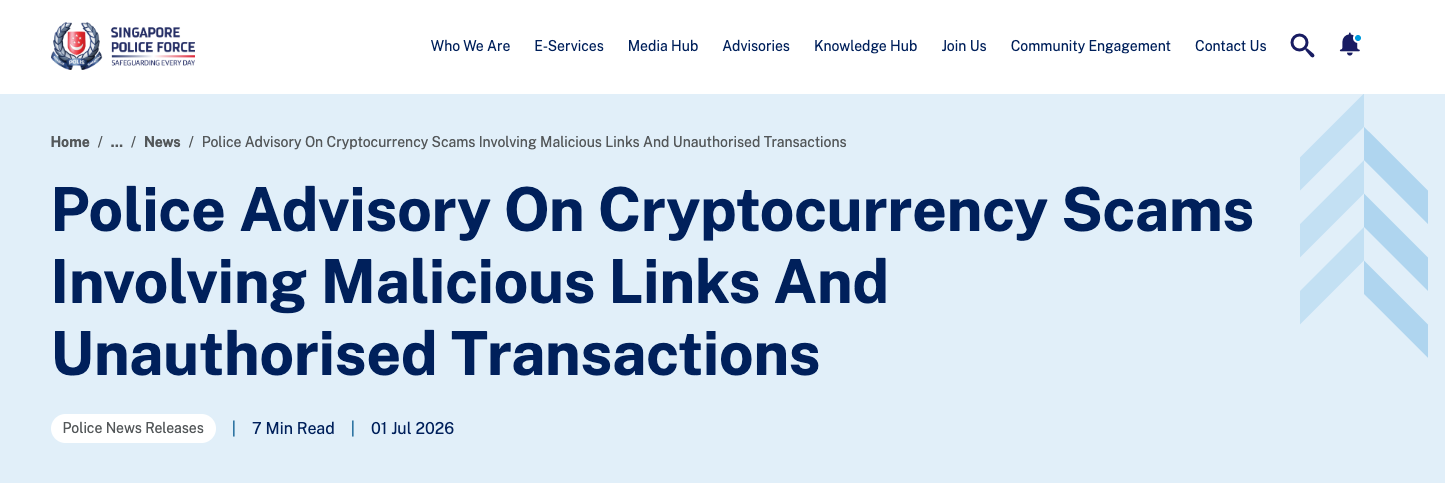
Read the Singapore Police Force advisory
3. Recovery risk: What happens if you lose your crypto wallet?
Losing a physical wallet device doesn't automatically mean losing your cryptocurrency.
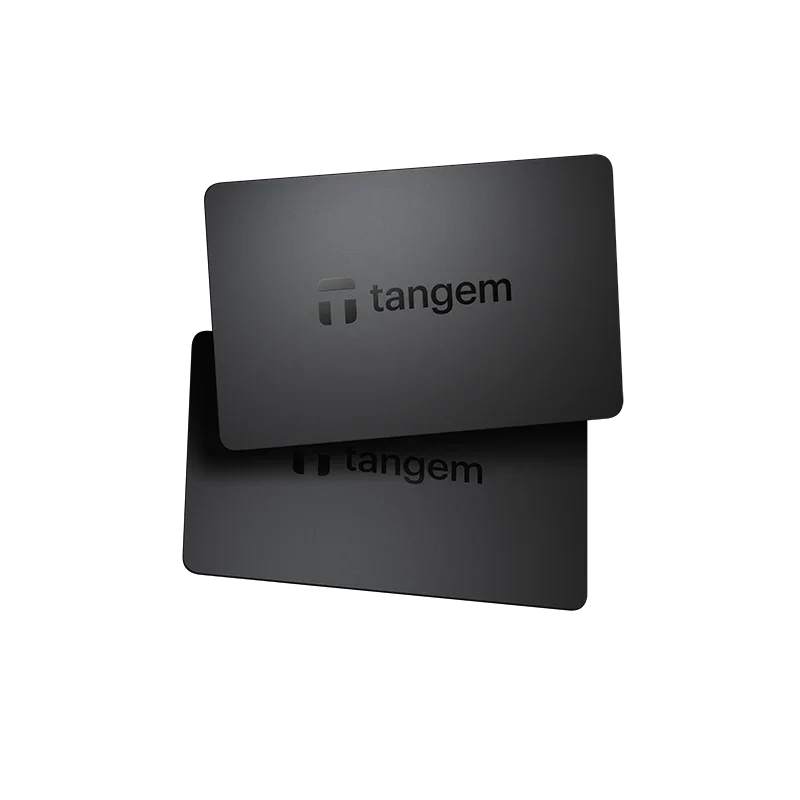
Tangem Hardware Wallet in the Card Format.
What's more important is whether you still have a working way to access the private keys.
Different wallets have different recovery methods.
Some use a seed phrase: a series of words that can restore access to the wallet.
Others use backup devices or different recovery arrangements.
For example, if you lose your phone but still have the hardware wallet and its required credentials, you may be able to access your assets using another phone.
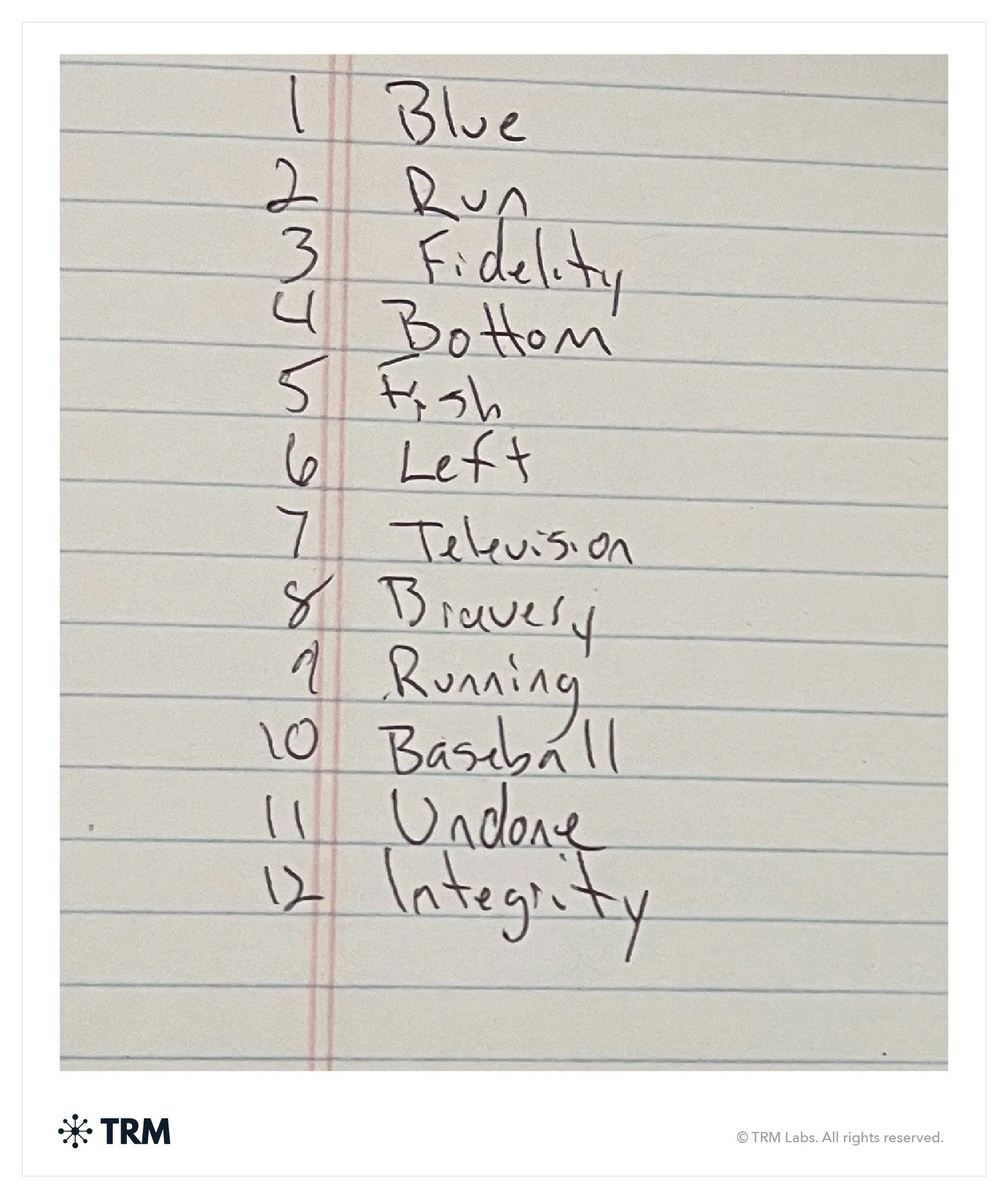
Not too sure if someone can read this..
If you lose one hardware wallet device but retain a functioning backup, recovery may also be possible.
However, if you lose every way to access your private keys, your assets could become permanently inaccessible.
How Tangem approaches wallet recovery
Sponsorship disclosure: This article is produced in collaboration with Tangem.
I've used Tangem as one of my hardware-wallet solutions.
Out of the box, Tangem uses a standard seedless setup together with additional Tangem devices as backups instead of requiring users to write down a recovery phrase.

Me using my Tangem Card as a mic holder!
And this changes how recovery works. If you lose one card but still have another functioning card and the required access credentials, you can generally continue accessing the wallet.
But if you lose every device in a seedless setup without another recovery method, Tangem cannot restore access for you.
This is why understanding the backup system is just as important as choosing the wallet itself.
Read Tangem's official recovery documentation
A seedless wallet removes one responsibility, but it requires you to protect the physical backup devices and maintain access to them.
4. Should you move crypto off an exchange?
I don't think everyone needs/should move all their crypto into self-custody; it might not be the right step for everyone. Really
The right setup depends on a few things:
How much you're holding?
How often you transact?
How comfortable you are managing security yourself?
Before transferring anything, I would ask:
How much am I protecting?
Does the amount justify taking responsibility for managing the wallet?
Can I recover my assets?
Do I know exactly what happens if my phone, wallet or backups disappear?
Can I transact safely?
Do I understand the permissions I'm granting?
Why am I moving my crypto?
Is it because self-custody fits my needs, or because someone told me it is always safer?
The answers may be different for someone holding Bitcoin for the long term versus someone who regularly interacts with decentralised finance applications.
Final thoughts
I understand why people like the saying,
"Not your keys, not your crypto."
It captures something important about ownership and control.
But there's another side to it.
“Your keys, your responsibility.”
A hardware wallet can be an excellent security tool. An exchange can also serve a useful purpose. Neither removes every risk.
The key here is choosing the arrangement you understand well enough to manage, rather than the one that simply sounds more sophisticated.
Control is valuable, but control without a recovery plan is only confidence until something goes wrong.
Watch the full video
In my YouTube video, I walk through in-depth about custody risk, signing risk and recovery risk.
Disclaimer: This article is for educational purposes only and is not personalised financial advice. Cryptocurrency assets are volatile and can result in substantial or total losses. Wallet security and recovery procedures vary by provider and setup.
