

Cashback, Miles or No Credit Card? Choose the System You Will Actually Use
Most people begin their credit card search with the wrong question.
They ask:
Which card gives the highest cashback rate, the most miles, or the biggest sign-up gift?
A more useful question is:
Which reward system fits how I already spend—and how much complexity I am willing to maintain?
And for most Singaporeans, Cashback, Miles and No credit card at all are three different systems. Each serves its own purpose, which can also become expensive or distracting when it does not match your spending behaviour.
Start with repayment
Before even comparing any reward, you really have to ask whether you can pay the full statement balance automatically every month. Otherwise, no matter how attractive the rewards are, the late payment fees will take away the reward value.
Basically, if you can't comfortably say yes to whether you can afford the repayment, the rewards conversation can wait. A small rebate or a points balance is not worth finance charges, cash-flow stress or using next month’s income to pay for last month’s spending.
This is not a moral judgement about credit cards. It is just the thought process before making any commitment.
First, make your payment system reliable.
Then decide whether rewards add value.
Cashback is for “certainty”
I’ll be honest, I like Cashback and here’s why. Cashback is probably the cleanest option when you want a known return from spending you already planned. And the Cashback Card that I use is the “Standard Chartered Simply Cash Card”
The trap here is treating the largest percentage as the real reward because it rarely is.
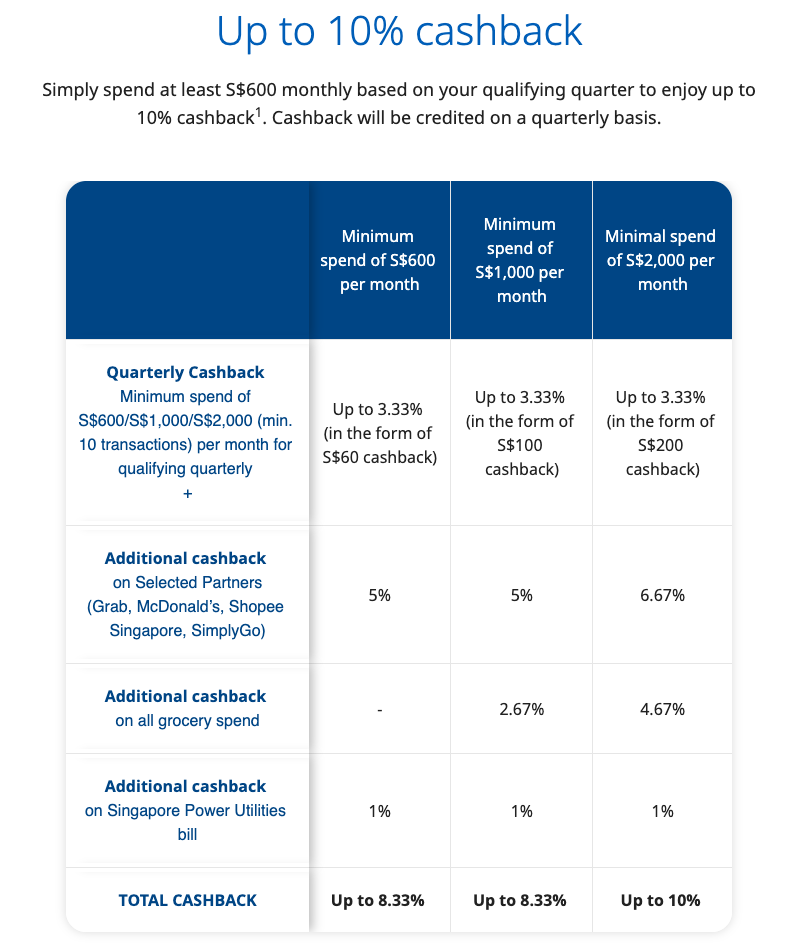
Headline says “Up to 10% Cashback” but realistically, it’s hard to achieve unless you’re a high spender.
A headline rate may sit behind a monthly cap, a minimum spend requirement, selected merchant categories or exclusions. The right comparison is not “10% vs 8.33%.”
It is:
How many dollars will I realistically receive in an ordinary month after the rules apply?
If you want low effort, a simple flat-rate cashback approach may be more useful than a higher category rate that needs constant tracking. If your spending is stable and predictably eligible, a more structured category card can make sense. The best choice is not the most exciting card; it is the one you will use correctly without reshaping your spending around it.
Miles are for intentional travellers
Miles have the potential for greater upside, but they are not automatically more valuable than cashback.
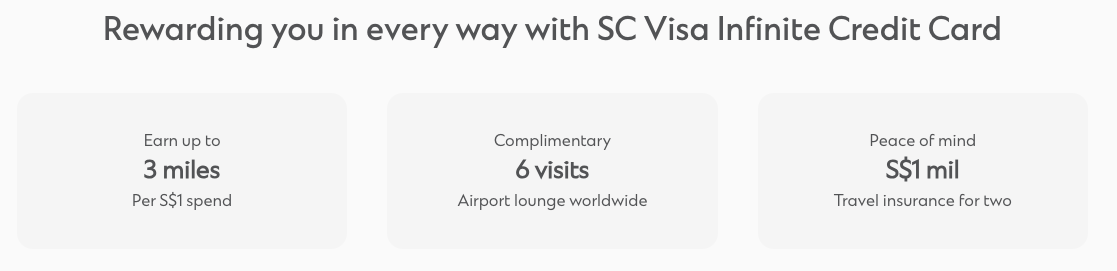
Earn miles as you spend can be a great idea if you got trips planned.
They work best for someone who already travels, can plan redemptions and does not mind learning the system. This means understanding which transfer partners have the best value, calculating conversion blocks/miles, flight availability, taxes, fees, expiry rules and programme changes.
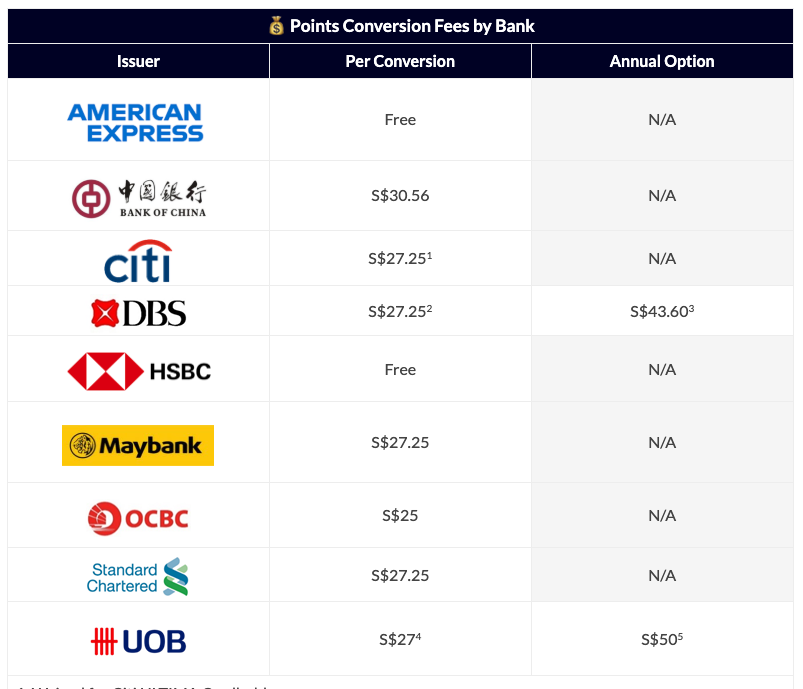
Airmile conversion fee Credit: Milelion
The useful question is not “how much are miles worth?” It is “what trip or redemption will I realistically use these miles for?”
If you do not fly often, do not enjoy planning travel, or would rather receive a known saving now, cashback may be the better fit. A point balance with no plan is not a reward. It is an unfinished task.
There is no 1 BEST CARD?!
There is a third choice, but this one gets ignored because nobody earns a referral from it: Keeping your payments simple.
Maybe you are building a repayment habit. Maybe your spending changes too much to meet card requirements. Maybe you do not spend enough for the rewards to justify the mental load. Or maybe you simply prefer fewer financial systems.
Not having a credit card is not automatically leaving money on the table. It can be a deliberate choice to reduce complexity until a rewards system actually fits.
Make a five-minute spending map
To choose the ‘best’ strategy for you, look at a normal month. Use your banking app or statement and list rough spend across groceries, transport, dining, online shopping, travel, bills and everything else. Which AI can technically put it into different categories for you now!
Then ask:
1. Where does most of my eligible spending already happen?
2. Would I meet any minimum spend without adding on purchases?
3. Would I still remember the spending cap, category spend and merchant exclusions in a busy month?
4. If I chose miles, what real trip or redemption would I use?
5. Can I pay the statement balance in full every month?
Once you get those answers, it will point you toward a simple cashback route, a miles route, or no rewards card for now.
Use products as evidence, not the conclusion
Like UOB One Card, there is a calculator that shows why categories and qualifying spend matter.
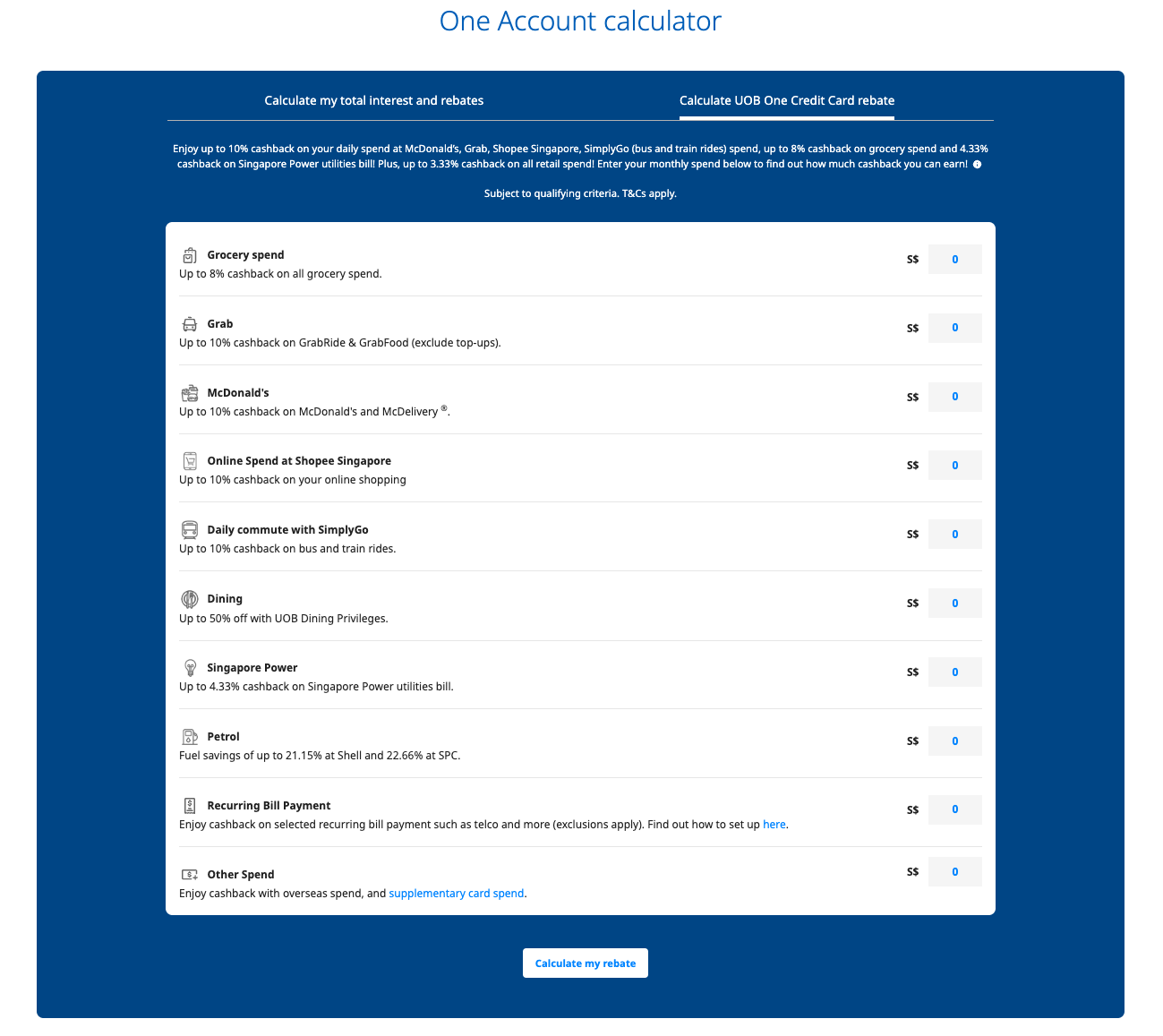
Key in some numbers to see how much Cashback do you actually get from various spend!
But products should come after the framework, not before it. Rates, caps, eligibility, fees and promotions change. Always check the issuer’s current terms before applying.
What should I choose then!?
A good rewards setup should work across 12 ordinary months, not just 1 enthusiastic month because of a sudden large purchase, after you apply.
Join Team Cashback if you value certainty and low effort.
Join Team Miles if you already travel and can use them deliberately.
Join Team No Card if full repayment or the admin still feels uncomfortable.
The right card is not the one with the biggest cashback or miles per dollar. It is the one that rewards the spending you already do, without asking you to become someone else to earn it.
Some links below may be referral links; using them may support the channel at no extra cost to you. I only include options discussed in the framework, but you should check current terms and your own fit before applying.
